Category: podcast

  • MobileViews retro-podcast Jan. 23, 2009 discussion with the original Google Earth for iOS developers

    This podcast was recorded way back on Jan. 23, 2009 (16 years ago) with the original Google Earth for iPhone developer team: my old friend (the late) Mike Morton, David Oster, and (product manager) Peter Burch along with Google spokesperson Aaron Stein. Although the iPhone was launched on June 29, 2007, the iPhone app store was not launched a year later on July 10, 2008. So, iPhone apps had only been available for 6 months when we recorded this podcast. I’m taking advantage of the relatively new Adobe Podcast (V2) audio enhancement and audiogram creation features to re-post this podcast as, I think, one of some historical interest. I also used Google Gemini to write a summary of the podcast as well as a more detailed bullet point discussion list for the blog on MobileViews.com.

    SUMMARY
    In this podcast recorded on Jan. 23, 2009, , the developers of Google Earth for iPhone discussed the creation and features of the mobile application. The team, including iPhone engineers Mike Morton and David Oster, shared insights into the development process. With extensive Macintosh experience, they found the iPhone SDK surprisingly similar to OS X programming, which provided a significant advantage. A long-held dream for the Google Earth team was to enable users to “hold the earth in your hand,” a vision only recently made possible by technological advancements.

    The developers addressed the challenge of optimizing Google Earth for the iPhone’s smaller screen and less powerful CPU. They emphasized streamlining the application by “trimming out some of the fat” accumulated in the desktop version and leveraging years of OpenGL tuning. A key focus was on creating a user-friendly interface that prioritized data display over decorative elements, influenced by Edward Tufte’s principles. The touch interface of the iPhone presented a unique opportunity to create a more intuitive way of interacting with the Earth, leading to the development of custom gesture analysis. Looking ahead, the team plans to continue developing Google Earth for iPhone, adding new features that cater to both existing desktop functionalities and mobile-specific contexts.

    DETAILED DISCUSSION SUMMARY

    • The Google Earth for iPhone development team included Mike Morton and David Oster (iPhone engineers), Peter Burch (product manager for Google Earth), and Aaron Stein (spokesman for Google).
    • Mike Morton and David Oster, who worked on Google Earth for iPhone, have about 25 years of Macintosh experience and have been on the iPhone since programming was opened up in summer 2018.
    • The iPhone SDK was surprisingly similar to programming OS X on a Mac, which was a “leg up” for experienced Mac developers.
    • Development tools for iPhone are based on GCC, allowing the use of C and C++ in addition to Objective-C.
    • Porting Google Earth to the iPhone was a long-standing dream of the Google Earth team, predating the iPhone’s introduction.
    • Technology barriers had previously prevented the realization of holding “the earth in your hand”.
    • Google Earth, originally Keyhole Earth Viewer, has been running as an application since around 2001, providing the team with experience in high-performance graphics applications on lower-powered hardware.
    • The Google Earth for iPhone was a “project project” and not a “20% time project”.
    • Achieving quick response times on the iPhone’s relatively weaker CPU involved significant performance tuning and “trimming out some of the fat” from the desktop version.
    • The fast performance also benefited from about ten years of OpenGL tuning on the desktop version of Google Earth.
    • Development challenges included adapting to the smaller screen size and deciding which features to include or exclude.
    • The team aimed to make the interface simple and uncluttered, with a focus on displaying data rather than decorative elements, influenced by Edward Tufte’s work.
    • Key features added included Wikipedia articles and panoramas of photos, making the product about exploring user content, not just satellite imagery.
    • The iPhone’s touch interface provided a better way of interacting with the earth than the desktop version.
    • The developers had to create their own gesture analyzer because Apple’s SDK provides raw finger position data rather than pre-defined gestures.
    • Unexpected uses of Google Earth for iPhone include its adoption by the scientific community for visualizing weather.
    • Users can provide feedback and ask questions through a help center group, with a link provided in the iTunes description for Google Earth.
    • Google plans future updates for Google Earth for iPhone, adding new features and building on the current version, with a focus on mobile-specific functionalities.
  • MobileViews 563: w/Jared Kuroiwa – Google Android XR, Headsets, and AI Integration


    In episode 563 of the MobileViews Podcast, I’m joined by guest co-host Jared Kuroiwa to a few of the announcements from Google I/O 2025, with a strong focus on Android XR and the new generation of mixed and extended reality headsets.

    Key highlights:

    • Android XR Headsets: Google showcased XR devices from partners like Samsung (Project Moohan) and Xreal (Project Aura). These headsets vary in design—from immersive goggles to stylish glasses—and rely on connected Android smartphones for processing. 
    • Three-Part Requirement: To fully use these devices, users will need (1) a compatible Android phone, (2) XR glasses, and (3) a Gemini AI subscription, adding cost and complexity. 
    • Design & Use Cases: Devices like Xreal’s Aura and Samsung’s headset aim to combine AR displays with real-world usability, offering features like translation, contextual info, and AI assistance—akin to Meta’s Ray-Ban smart glasses. 
    • Local vs. Cloud AI: Jared shares insights into running local LLMs on mini PCs and the promise of lightweight, on-device AI, comparing it to cloud-based tools like ChatGPT and Google Gemini. 
    • Other Tools Discussed: Google Whisk for generative video, the future of XR optics, device compatibility issues, and the role of design in public acceptance of smart eyewear. 

    The episode delivers a deep dive into the near-future of consumer XR, wearable AI, and how tech companies are shaping digital experiences beyond the smartphone.

    Available via Apple iTunes.
    MobileViews YouTube Podcasts channel
    MobileViews Podcast on Audible.com

  • MobileViews 561: Why did we stop using Windows Mobile/Phone w/guest Frank McPherson


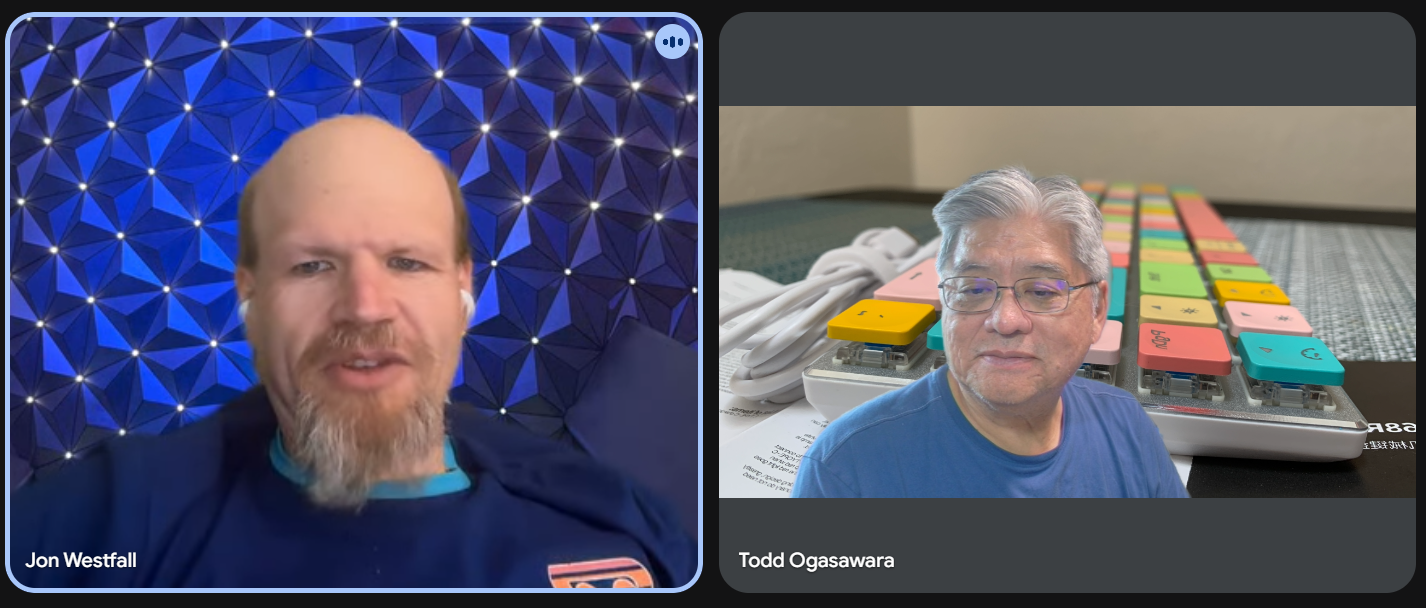
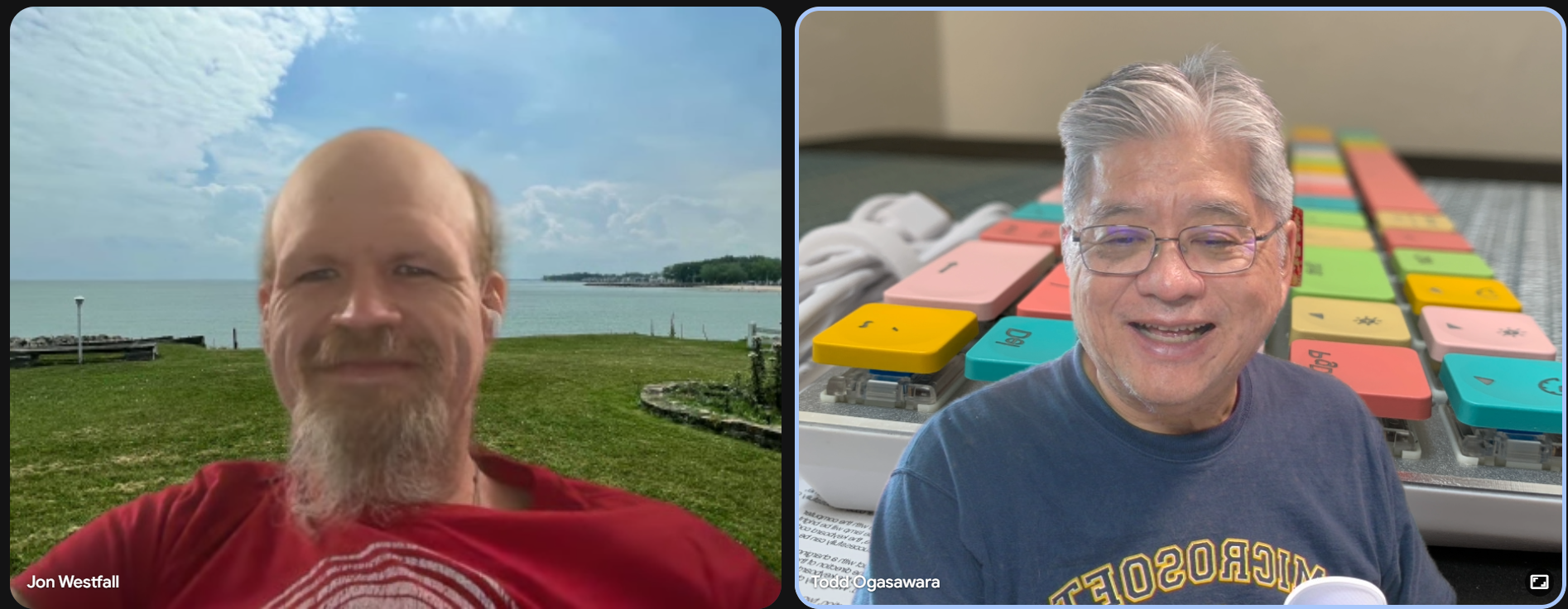
    In this podcast Todd Ogasawara and Jon Westfall are joined by frequent guest panelist Frank McPherson. They discuss:

    Podcast summary create by Google Gemini based on a transcript created by Adobe Podcast

    Todd’s Gemini Account Mystery: Todd is still locked out of Google AI mode on his primary account but can access it through a secondary one, suspecting an old account configuration issue.

    NotebookLM’s New “Discover Sources”: A new feature in Google’s NotebookLM is likened to having a personal reference librarian, quickly gathering and annotating potential web sources based on a topic description.

    Nostalgia for Librarians: The pre-internet era’s reliance on knowledgeable librarians for research assistance is fondly remembered.

    NotebookLM in Academia: John shares his positive experience using NotebookLM for academic purposes, allowing professors to analyze and compare information from multiple sources for students.

    Local LLM Exploration: John has also been experimenting with local Large Language Models to handle even more sources than NotebookLM allows.

    Reliability Concerns with AI: Frank expresses caution regarding the reliability and accuracy of information gathered from AI tools, especially when researching unfamiliar topics.

    Safer Use of NotebookLM: Frank finds uploading PDFs to NotebookLM and querying within that confined source a more reliable way to use the tool.

    Testable LLM Output: LegoGPT: A fascinating GitHub project, LegoGPT, can generate text-based instructions for building stable Lego models with a surprisingly high success rate (98%).

    The Unzoom Struggle: A humorous moment as Todd grapples with camera zoom controls, resulting in close-ups of his nose.

    Kindle App Book Purchases on iPhone: Due to an injunction in the Epic Games vs. Apple lawsuit, iPhone users in the US can now purchase Kindle books directly through the Kindle app.

    The 30% App Store Cut: Apple’s long-standing 30% commission on in-app purchases and subscriptions was the core of the legal battle.

    Audible vs. Kindle for Books: Todd primarily listens to audiobooks via Audible but still reads digital comic books.

    Comixology Integration Woes: The merging of Comixology’s comic book viewing into the Kindle app is considered a downgrade by Todd.

    Circumventing Purchase Restrictions: Previously, buying digital books on Apple devices often involved going directly to the Amazon website.

    The Inevitable Shift: The panel believes Apple will likely lose the appeal and that allowing alternative purchase methods will become the norm.

    Early Comixology Convenience: The pre-Amazon Comixology app allowed in-app purchases, which was convenient but costly.

    Rising Comic Book Prices: Comic book costs have significantly increased over the years, making them less accessible for kids.

    Surface Pro 11 Issues: Todd has experienced numerous problems with his Surface Pro 11, including printer driver malfunctions and inconsistent hub connectivity (display and power).

    Co-pilot Plus AI PC Delay: Key AI features of the Surface Pro 11 are still unavailable months after purchase.

    MacBook Air Reliability: Switching back to a MacBook Air resolved the connectivity issues experienced with the Surface Pro 11.

    Windows Mobile’s Demise: The incompatibility of Windows Phone with existing Windows Mobile apps was a significant factor in its eventual failure.

    Frank’s Early Android Adoption: Frank switched to Android (T-Mobile G1 in 2008) relatively early due to its open and flexible nature compared to the closed Apple ecosystem.

    The Game-Changing iPhone: The announcement of the iPhone was recognized by many in the mobile tech space as a revolutionary device.

    Android’s Openness: Android’s expandability (storage cards, removable batteries) was a key draw for early adopters like Frank.

    Palm’s Evolution: Palm’s journey through its own OS, Windows Mobile, and WebOS is briefly touched upon.

    HP’s Acquisition of Palm: HP eventually bought Palm.

    Timeline of Mobile OS Developments: The podcast highlights the timeline of Windows Mobile 6, the iPhone announcement, the release of the Android G1, and Windows Phone 7.

    Carrier Exclusivity: The iPhone’s initial exclusivity with AT&T and the challenges of SIM swapping on major carriers are recalled.

    T-Mobile’s Sim Swapping Friendliness: T-Mobile was known for being more open to users swapping SIM cards between devices.

    Verizon’s Late iPhone Entry: Verizon didn’t start selling the iPhone until 2011.

    Palm Pre’s Carrier Limitation: The Palm Pre’s initial launch on Sprint, a smaller network, hindered its market reach.

    Visual Voicemail’s Impact: The iPhone’s user-friendly visual voicemail system was a significant advantage over the traditional DTMF-based systems.

    Carrier Control vs. Apple’s Approach: Carriers initially resisted Apple’s control over software and release schedules.

    The Arrival of the App Store: The App Store, which debuted around the iPhone 3G era, revolutionized software distribution on mobile devices.

    Early App Store Landscape: Before the iPhone’s App Store, app stores were primarily carrier-tied with limited third-party options.

    Carrier Rebranding Practices: A brief mention of how carriers used to rebrand identical devices under different names.

    Available via Apple iTunes.
    MobileViews YouTube Podcasts channel
    MobileViews Podcast on Audible.com

  • MobileViews 560: Windows Mobile 25th anniversary discussion w/guest co-host Frank McPherson


    I’m joined by guest co-host Frank McPherson for this May the 4th Be With You podcast. We discuss:

  • MobileViews 558: Gotchas prepping ancient Macs for recycling; SSD bit-rot? AI-s learning about you; Plaud NotePin preview


    In this podcast, Jon Westfall and I discuss:

    • Future discussion series: 25 years of Windows Mobile (29 years of Windows CE)
    • Waiting for the more Mac-like iPadOS 19
    • Earth Month: Preparing ancient Macs (2004 iBook, 2007 iMac, 2010 MacBook Air) for recycyling
    • SSD bit-rot?
    • ChatGPT and other LLMs now know you pretty well with their ability to remember. Is this good? Bad?
    • Preview of a larger discussion of Jon’s new Plaud NotePin

    Available via Apple iTunes.
    MobileViews YouTube Podcasts channel
    MobileViews Podcast on Audible.com