Category: podcast

  • MobileViews 572: iPadOS 26, AppleCare One, Adobe Editing & Android Phone Market Shift


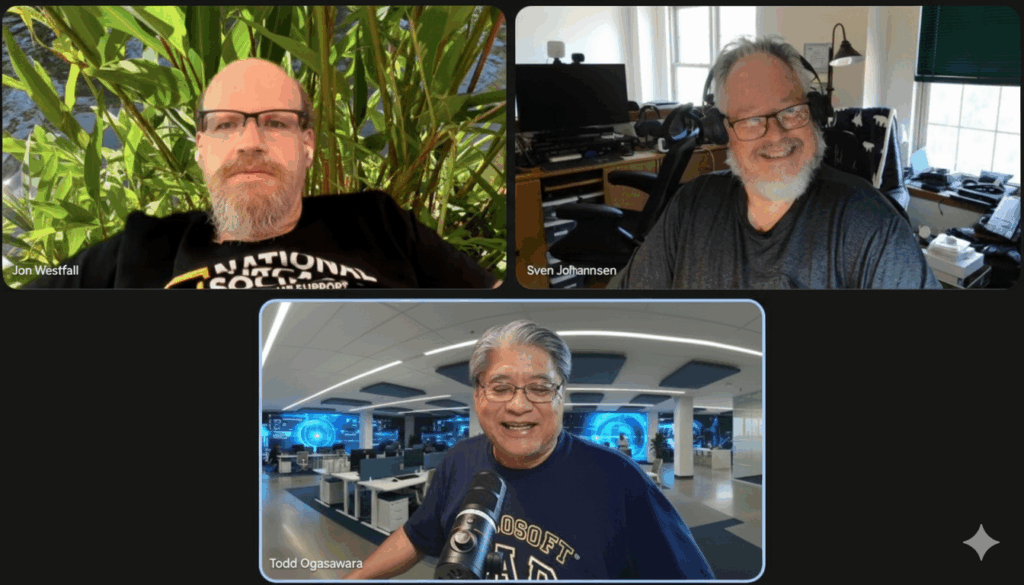
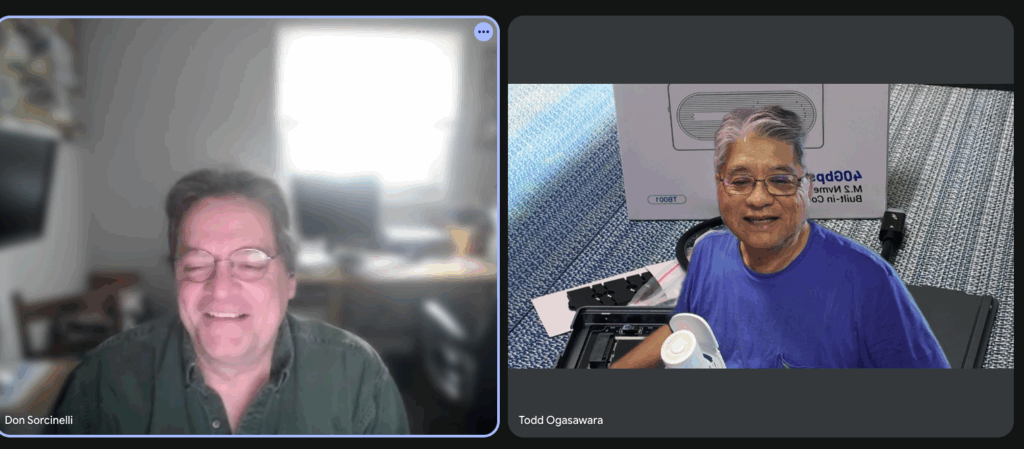
    Todd Ogasawara and Don Sorcinelli delved into several recent developments in personal technology, starting with Apple’s new offerings. They discussed AppleCare One, a simplified coverage plan launched on July 23, 2025, which allows customers to protect up to three Apple products for $19.99 per month, with options to add more devices. This plan bundles all AppleCare+ benefits, including unlimited accidental damage repairs, 24/7 expert support, battery coverage, and extends theft and loss protection to iPad and Apple Watch. Don highlighted this as a “win-win” for both Apple and consumers, offering both simplicity and potential cost savings over individual plans. The conversation then shifted to Todd’s experience with the iPadOS 26 public beta. He noted significant improvements in the new windowing system, which provides desktop-like functionalities such as closing, minimizing, resizing, and tiling app windows. New apps like Journal and Phone are now available on iPad, and a macOS-style menu bar has been introduced. Todd also explored the Local Capture feature, enabling native audio and video recording on iPadOS/iOS 26 devices, which, while useful for content creation, only records the user’s side of the conversation in a call.

    Beyond Apple, the discussion covered crucial software updates and market observations. Todd highlighted a new feature in Adobe Podcast Studio that allows users to edit video by simply editing its transcribed text, significantly simplifying the process of cutting and rearranging video segments. They clarified a common misunderstanding about Microsoft Authenticator: while its password manager functionality is being removed by August 1, 2025, the multi-factor authentication (MFA) feature will remain active, with a push towards passkeys as a more secure login method. From an enterprise IT perspective, Don shared insights into the marked improvements in Microsoft Intune’s support for Mac OS management, a development that streamlines device administration for companies striving for a “single pane of glass” solution across diverse operating systems. Finally, they observed the landscape of the US Android phone market, noting its overwhelming dominance by Samsung and Google Pixel, with other brands like Motorola having a very limited presence, largely influenced by carrier offerings and marketing strategies

    Available via Apple iTunes.
    MobileViews YouTube Podcasts channel
    MobileViews Podcast on Audible.com
  • MobileView 571: No EVs for Hawaii? RapidRAW image editor; NotebookLM; iPadOS 26 beta; Oura Ring


    For MobileViews Podcast 571, I’m joined by guest co-hosts Sven Johannsen and Don Sorcinelli. We discuss:

    Matson, Hawaii’s largest ocean cargo carrier, has ceased accepting electric vehicles (EVs) and plug-in hybrid vehicles for transport to and from the islands due to mounting safety concerns over lithium-ion battery fires at sea, a move expected to severely impact Hawaii’s car market. In a brighter tech development, RapidRAW, a new open-source RAW image editor, was introduced as a high-performance, lightweight alternative to Adobe Lightroom®, impressively developed by an 18-year-old with Google’s Gemini AI models and boasting GPU-accelerated processing and AI masking. Meanwhile, Google’s NotebookLM, an AI-powered personalized research assistant, was praised as a “game-changer for productivity” due to its source-grounded nature that minimizes “hallucinations”; it proves valuable for streamlining tasks, managing finances, and facilitating passive learning via “Audio Overviews” generated from user-fed sources. Its enhanced NotebookLM Plus offers higher limits and a 50% student discount, complemented by new curated “featured notebooks” on expert topics like Shakespeare. Beyond specific applications, broader shifts in operating systems include Google’s potential merger of Chrome OS and Android into a unified platform, and advancements in tablet interfaces like Apple’s iPadOS 26 developer beta with its touch-first windowing capabilities, alongside the anticipated Android desktop mode (similar to Samsung’s Dex) for lightweight travel setups, though consistent user concerns about effective file management across these diverse platforms persist. Finally, the Oura Ring was highlighted as a screen-less fitness tracker alternative, capable of monitoring parameters like pulse and oxygen, and suitable for restricted environments due to its lack of Wi-Fi/cellular/microphones/cameras.

    Available via Apple iTunes.
    MobileViews YouTube Podcasts channel
    MobileViews Podcast on Audible.com
  • MobileViews 570: Live by the iOT, die by the iOT


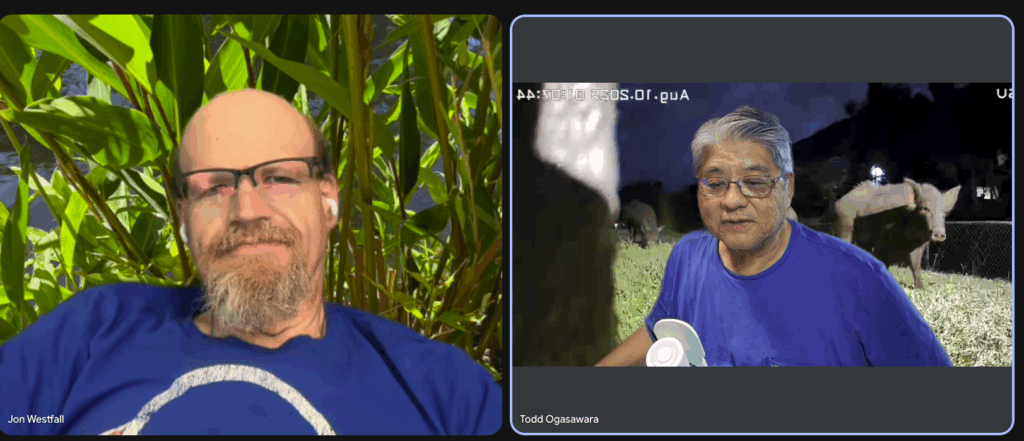
    The “MobileViews 570” podcast, featuring Todd Ogasawara and Dr. Jon Westfall on July 13th, 2025, tackles a crucial theme: “Die by the IoT”. This isn’t just a catchy title; it’s a deep dive into the frustrating reality of smart devices becoming obsolete due to company decisions. Jon Westfall shared his dismay over Belkin’s WeMo smart home devices, including a light switch he uses, losing support on January 31st, 2026, less than three years after some models were last sold. He suspects a recent sale he took advantage of was due to its impending discontinuation. This echoes his prior experience with iHome ISP5 smart plugs, whose service was discontinued years ago, though they luckily retained functionality via Apple HomeKit compatibility. Todd resonated with this, recalling a sub-$50 purple NAS-like device that became inaccessible when its cloud service was unexpectedly shut down. Both hosts strongly agreed with the sentiment of an Ars Technica article, “Belkin shows tech firms getting too comfortable with bricking customers stuff,” expressing their frustration with the dependency on cloud-based services and the expectation that products should last more than two or two and a half years. They also noted that even major players like Microsoft (Azure IoT) and Google (Cloud IoT) have been closing their IoT services for developers, leaving developers in a tough spot. A potential solution, as suggested by John, could be for companies to release the code for discontinued devices to the “geeky IoT community” for ongoing support.

    Beyond the looming threat of device obsolescence, Todd and Jon explored the evolving landscape of AI and exciting new gadgets. Todd discussed Perplexity’s Comet AI browser, noting its current requirement for a $200/month Perplexity subscription for full access, though a waitlist for a free version exists. They lamented the challenge of discerning the utility of various AI services like Copilot, Gemini, and ChatGPT due to their constantly changing and inconsistent features. Todd primarily uses Google’s Gemini, which he recently leveraged to find a “way fun” method to import a photo of his line drawing into Procreate for digital coloring underneath the lines. Jon, on a more creative note, is co-authoring a musical titled “Happy Apocalypse” with AI. He also highlighted the practical application of AI, using his Plaud Note Pin (or transcribing Teams recordings via Plaud) to summarize dissertation student meetings, proving highly useful for both himself and the student’s progress reports.

    The podcast also delved into some compelling new hardware. Jon enthusiastically shared his experience with the Kobo Libra Color e-reader, which boasts a color E Ink display, a stylus (sold separately), and native connectivity to Google Drive and Dropbox, offering a flexible, non-Amazon alternative to his old Kindle Oasis. He particularly praised the stylus’s paper-like feel on the E Ink display, with low latency, making it ideal for note-taking, marking up, and highlighting. Meanwhile, Todd acquired a low-cost Arturia MiniLab 3 MIDI controller, a USB-C powered device with drum pads, sliders, knobs, and velocity-sensitive keys, which works well with GarageBand. Jon also recently picked up the Wand Company Star Trek Original Series Tricorder, noting its high quality, functional disks, and voice recorder. Other brief mentions included Todd’s anticipation for iPad OS 26’s public beta, his past experiences with the Microsoft Spot Watch, Jon’s inexplicable phone time zone glitch, Todd’s interest in an E Ink touchpad concept for computer keyboards, and his fondness for the now-removed MacBook Pro Touch Bar. The episode wrapped up with the hosts looking forward to future tech discussions and adventures.

    Available via Apple iTunes.
    MobileViews YouTube Podcasts channel
    MobileViews Podcast on Audible.com
  • MobileViews 568: Everything is AI Now: – Slop, Speech, & Subscriptions


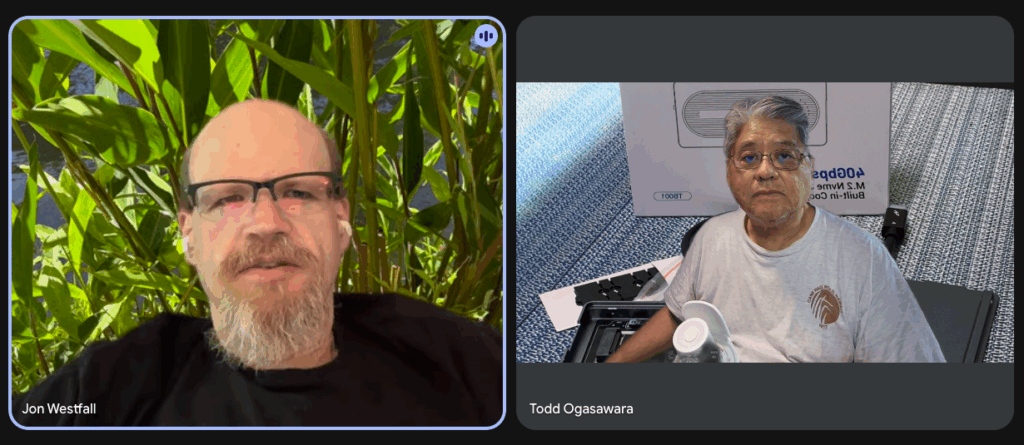
    In this podcast, Jon Westfall and I discuss:

    Available via Apple iTunes.
    MobileViews YouTube Podcasts channel
    MobileViews Podcast on Audible.com
  • MobileViews 565: Pre-WWDC; Windows to Linux; OpenAI Codex in ChatGPT


    • Todd Ogasawara shared his struggles with his 2019 HP Envy 360 laptop, which cannot update from Windows 10 due to an unsupported AMD Ryzen processor for Windows 11, and Google FlexOS has also deprecated support for it.
    • He has returned to using Linux, noting that while Linux Mint didn’t work with his Bluetooth mouse, Ubuntu did.
    • Apple Find My is now usable in South Korea as of June 1st, 2025, contrary to previous assumptions about privacy laws.
    • Rumors suggest AirPods Pro 2 and AirPods 4 may gain camera control, sleep detection, and new head gestures for answering calls and dismissing notifications.
    • Jon Westfall observed that many students wear AirPods constantly, even when not actively listening to content.
    • There’s speculation about iPadOS 26 potentially including a menu bar, and both speakers expressed hope for improvements to Stage Manager.
    • OpenAI’s Codex, now available on the plus platform, was discussed for its AI coding capabilities, with Jon sharing an experience of it detecting an “inconsistency” in his code that was an intentional change.
    • The speakers humorously compared the AI’s “helpful” persistence to a “code therapist”.
    • They also joked about AI’s increasing presence and a “Mechanical Turk” scenario where seemingly AI-powered services are actually human-driven.
    • The upcoming WWDC event was mentioned, with anticipation for new features and hardware support announcements.

    Available via Apple iTunes.
    MobileViews YouTube Podcasts channel
    MobileViews Podcast on Audible.com

  • MobileViews 564: Jon’s experience with AI in higher education


    In this podcast, Jon Westfall and I discussed:

    A significant portion of our conversation centered on the continuing proliferation of AI in consumer products. We noted an increasing sense of “AI fatigue”—the saturation of artificial intelligence in nearly every product and announcement. Although I am personally intrigued by developments in AI-generated video and imaging, especially from Google and Meta, I also find the AI trend overwhelming at times. I am even considering subscribing to Google One’s AI Premium offering to further explore these capabilities, particularly for personal creative projects.

    We also speculated on potential announcements from Apple’s upcoming WWDC, especially regarding artificial intelligence and whether Apple will finally deliver tangible AI features, following a less-than-smooth rollout of “Apple Intelligence.” I expressed hope for hardware updates, such as a refreshed Apple Watch Ultra or a more affordable version of the Vision Pro headset—rumored to be called the Vision Air.

    I noted that I recently began revisiting older episodes of this podcast, some dating back to 2008. I’ve started re-editing and publishing select episodes as audiograms. One of these featured an interview with the developers of Google Earth for iPhone, recorded in early 2009—just six months after the App Store’s debut. It was particularly meaningful to hear the voice of my late friend Mike Morton, one of the app’s original developers.

    We also touched on some of my ongoing technology experiments. I’ve been attempting to repurpose a 2019 AMD laptop that no longer supports Windows 11. My initial plan to install ChromeOS Flex was thwarted by hardware incompatibility, so I’ve shifted my attention to Linux Mint. Although I encountered issues related to UEFI preventing boot from a USB drive, I plan to revisit this project soon

    Jon offered a compelling perspective on the evolving role of AI in higher education. He discussed how he and other faculty are adapting to student use of AI tools such as ChatGPT, emphasizing the importance of transparency, responsible use, and pedagogical innovation. Jon’s work in this area demonstrates a balanced, practical approach that integrates emerging technology while preserving academic integrity.

    We concluded the episode with a broader reflection on the societal implications of AI, particularly the concern that up to 50% of entry-level jobs may be impacted in the coming years. As someone no longer in the workforce, I observe these shifts with a mix of concern and curiosity, especially regarding how younger generations will navigate such disruptions. We acknowledged the historical cycles of technological change—from calculators and word processors to broadband and mobile computing—and how each brought both fear and opportunity.

    Available via Apple iTunes.
    MobileViews YouTube Podcasts channel
    MobileViews Podcast on Audible.com