Category: podcast

  • MobileViews 579: AirPods Pro 3 mic vs. other mics; Nothing Ear (3), Meta Ray-Ban Display glasses, & our fav Windows CE devices


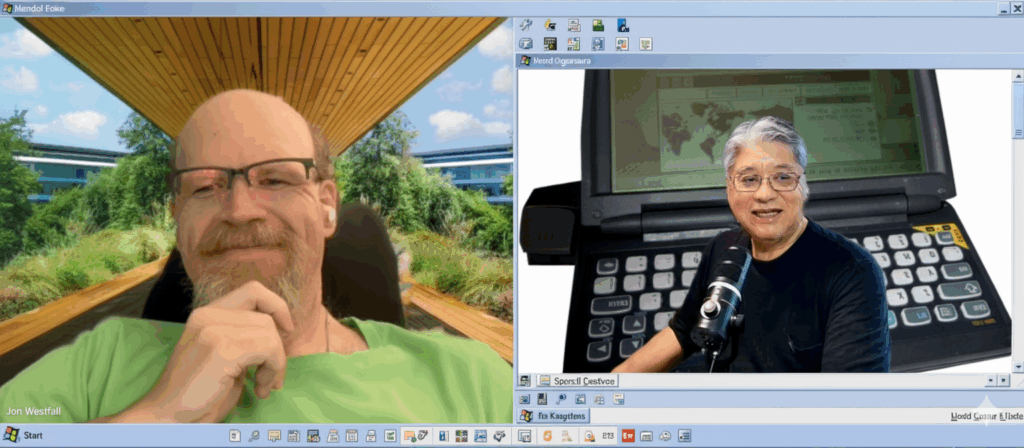
    In this podcast, Jon Westfall and I discuss several new technology releases and personal experiences with gadgets. They talk about Google’s plans to integrate AI features into the Chrome browser to improve security and search functionality.

    Nothing Ear (3) earbuds, which have an interesting feature where the charging case can be used as a microphone.

    AirPods Pro (3), noting the magnetic case and the new ear tips, and he and Ogasawara compare the sound quality of various microphones.

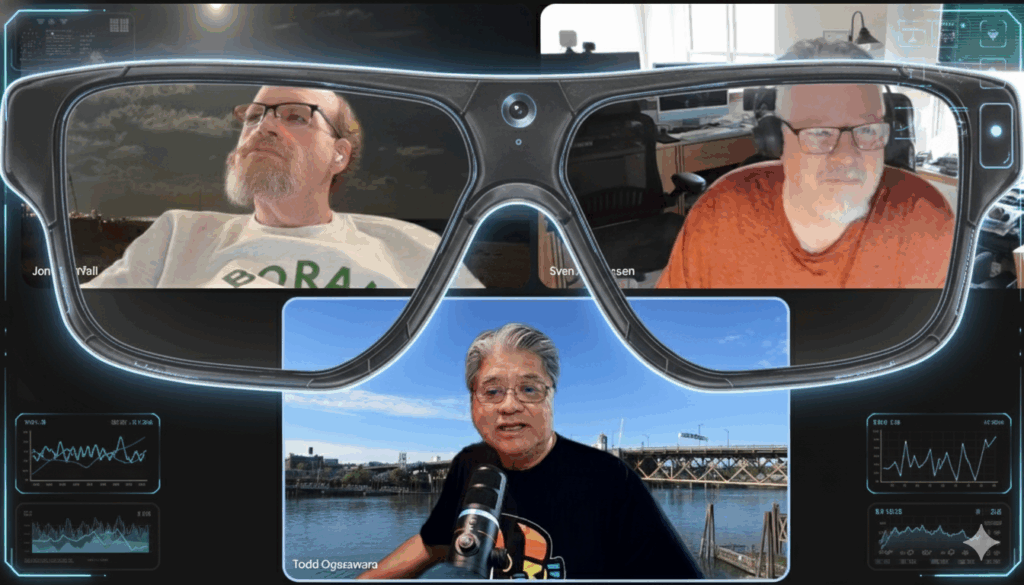
    Meta Ray-Ban smart glasses with a heads-up display and gesture control, but express frustration over the limited availability and the requirement to get a demo at a few select stores.

    We also briefly touch upon the new iPhone Air, speculating that it is a test run for a future foldable iPhone.

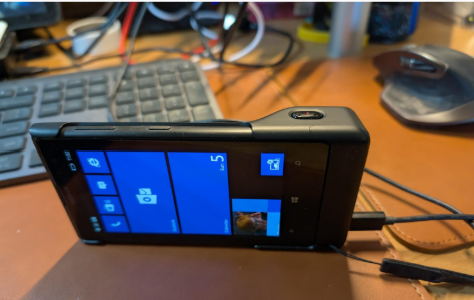
    Mac OS 26 update and its effect on the VO2 Max calculation, which has led to inconsistent readings for users. The podcast ends with a nostalgic discussion of their favorite Windows CE devices. I talked about my first Windows CE device: The HP 320LX Handheld PC. Jon discussed his first “real” smartphone, the HTC Himalayas, and his all-time favorite, the HTC Kaiser or Titan II, praising its form factor and features.

    HP320LX background photo courtesy of Centre for Computing History

    Available via Apple iTunes.
    MobileViews YouTube Podcasts channel
    MobileViews Podcast on Audible.com

  • MobileViews 578: Apple’s September Event & The AI Spat


    In the latest Mobile Views podcast, Todd Ogasawara and Jon Westfall discuss Apple’s recent product announcements, focusing more on software than hardware. They note that the new operating systems, including iOS, iPadOS, and watchOS, are where users will see the most significant changes, with updates scheduled to be released on September 15th. The new operating systems have a “liquid glass” design, which changes the overall look and navigation. They also touch on the new iPhone “Air,” which they theorize may be a precursor to a foldable phone, as it is a result of Apple’s research and development for foldable technology.

    They also share their thoughts on other new products and features. Ogasawara and Westfall express disappointment that the new AirPods Pro did not include an LCD display case or a thermometer, features they were hoping for. Ogasawara also discusses his experience with the Google Pixel 10 Pro’s AI features, including the built-in thermometer. They also talk about the new sleep score feature on watchOS 26 and the upcoming hypertension detection. Finally, they express their frustration with the lack of progress in phone technology, reminiscing about a time when new features like GPS and Wi-Fi were added every year, and they suggest that people who upgrade every two or three years will find the changes more exciting than those who upgrade annually.

    Available via Apple iTunes.
    MobileViews YouTube Podcasts channel
    MobileViews Podcast on Audible.com
  • MobileViews 576: Google Breach, Pixel 10 Pro AI, MagSafe & Smart Ring Chargers w/guest Sven Johannsen


    Todd Ogasawara, Jon Westfall, and Sven Johannsen discussed  the widespread alerts about a Google data breach urging Gmail password changes, which Todd noted he had not personally received despite seeing numerous reports. The conversation quickly moved to their personal tech upgrades, with both Todd and Sven having recently acquired new Pixel phones—Todd upgraded from a Pixel 7a to a Pixel 10 Pro, and Sven opted for a Pixel 10 Pro XL. They praised the Pixel 10 line’s advanced AI features, including the ProRes 100x digital zoom, which Todd found “shockingly good” and “fantastic” for capturing distant details with clarity, even if tech blogs might deem it “fuzzy”. Other impressive AI integrations include Live Translate, which Todd’s wife found amusing in its word choices, and Call Notes for transcribing phone conversations. Todd also highlighted the benefit of a one-year Google One AI Pro subscription that came with his Pixel and applauded the new Pixel Snap feature, confirming its compatibility with Apple MagSafe chargers.

    Further expanding on accessories and broader tech, Todd expressed excitement about the Pixel 10 Pro’s new temperature-taking capability, useful for both body and object temperatures. He also shared his experience with the Anker Nano Power Bank (5K, MagGo, Slim), an ultra-slim, Qi2 Certified 15W Max MagSafe-compatible portable charger with a 5,000mAh capacity. Despite being marketed primarily for iPhones, Todd found it worked with his Pixel, appreciating its design and color, though he observed lower-than-expected charging wattage with both his Pixel and iPhone. Sven recommended the Doohoeek Updated Charging Case for Oura Ring 4 & 3 Charger, a portable wireless power station featuring a 1000mAh battery that converts the official wired charger into a convenient portable solution, providing up to five full charges for the Oura Ring. Jon, an Oura ring user, weighed in on the practicality of such a case, also mentioning the recent controversy surrounding Aura’s partnership with Palantir and concerns about consumer data privacy. The discussion also touched upon the desire for easier switching between mobile ecosystems and the evolving understanding of AI’s capabilities and limitations.

    Available via Apple iTunes.
    MobileViews YouTube Podcasts channel
    MobileViews Podcast on Audible.com

  • Jurassic Tech 1 revisited: Interview with Kent Ekberg to discuss the first electronic camera – the 1981 Sony Mavica

    Way back in January 2012 I was a tech writer for the short lived revival of BYTE magazine as an online-only publication. I had the privilege of interviewing Kent Ekberg to learn about the Sony Mavica prototype analog electronic (not digital, not film-based) camera as he, in his role as a Sony Corporate Planner,  introduced it to professional photographers and artists in the US in the summer of 1981. Kent also played a key role in the introduction of CDs, CD-ROMs, and was a product champion for optical discs.

    I’m taking advantage of 2025 technologies like Google NotebookLM and Adobe Podcast Studio to revisit our conversation, clean up the recorded audio a little, and provide a captioned video “Audiogram” of our discussion.

    Sony Mavica photo attribution: By Morio, CC BY-SA 3.0, https://commons.wikimedia.org/w/index.php?curid=131924791


    Kent Ekberg joined Sony in September 1981 and was a Corporate Planner until he left the company around 1990. His role involved leading the corporate plan for Sony’s non-consumer business, which encompassed nascent computer products, peripheral devices like floppy disks, electronic cameras, and optical disks such as CDs and CD-ROMs.

    His key experiences at Sony include:

    • The Original Sony Mavica (Magnetic Video Camera):

        ? Ekberg was closely involved with the Mavica prototype, which was introduced in August 1981.

        ? A significant part of his job was to demonstrate these prototypes at tradeshows and to major professional clients, including Time-Life, prominent photographers, and artist Peter Max, to understand potential uses for these groundbreaking products.

        ? He highlighted that in 1981, the concept of a filmless or electronic camera was considered “science fiction”.

        ? The Mavica was an analog electronic camera that captured still video frames, storing them on a small magnetic “Mavica floppy” disk. He estimated its resolution to be around 640×480 pixels, comparable to VGA quality at the time, which was better than typical video.

        ? Sony initially introduced the Mavica as a professional product rather than a consumer one, acknowledging the market’s unpreparedness for such technology.

        ? He conducted one of his first corporate strategic planning studies on the Mavica’s market potential and observed the reluctance of entrenched film companies like Kodak and Fujifilm to embrace new electronic imaging technologies.

        ? He recounted that demonstrations were often “static” but effective, showcasing the “magic” of instant image capture, printing, and even electronic transmission—a novel capability that allowed photos from overseas to be transmitted to Time-Life in New York for publication.

        ? Ekberg found the original analog Mavica to be “point and shoot” and easy to use. However, he recognized that for professional photographers, greater sophistication, such as lens adapters for Nikon and Canon lenses, would be necessary.

        ? The original analog Mavica was not a “runaway product”, and Sony chose not to aggressively market it to consumers, anticipating the eventual emergence of digital technology, an area where Sony initially lacked core expertise compared to Silicon Valley firms.

        ? Due to the limited number of prototypes (only one or two in the country), he frequently had to coordinate and even “fight” for access to the Mavica for various demos.

    • Other Technologies and Strategic Insights:

        ? Ekberg also worked extensively on CD, optical disc, and CD-ROM technologies, even more so than on Mavica.

        ? He served as Sony’s product champion for optical discs, navigating standardization challenges (Sony collaborated with Philips to develop the CD and CD-ROM) and taking prototypes to market to explore their applications.

        ? He played a role in establishing Sony’s disc manufacturing infrastructure, including the first disc plant in the United States.

        ? He collaborated with companies like Microsoft to legitimize CD-ROM technology, noting the adoption of Office on CD-ROM.

        ? He observed the resistance of traditional media, such as The New York Times, to embrace electronic formats due to concerns about cannibalizing their existing print business.

        ? He provided context for the technological landscape of 1981, noting that personal computers, like the newly introduced IBM PC, were not consumer products, and even Sony’s large New York office had very few computers.

        ? He highlighted the typical product trajectory for high-tech consumer electronics, where innovations often start in professional markets before transitioning to consumer availability

  • MobileViews 575: Why do LLMs dislike Asimov’s Three Laws of Robotics?

    Google Photos (Android) AI Enhance

    In this podcast, Todd Ogasawara and Jon Westfall discussed several notable updates and new gadgets in the tech world. Google Photos is rolling out new AI-powered creative tools, including “Photo to video,” which animates still pictures into short video clips, and “Remix,” capable of transforming photos into various art styles like anime or 3D animations. These features will be accessible through a new “Create tab” in the Photos app. Additionally, the Blood Oxygen feature has returned to Apple Watch models (Series 9, Series 10, and Ultra 2) in the U.S. after a U.S. Customs ruling, with sensor data now processed and calculated on the paired iPhone. The conversation also touched upon a new accessory, the Spigen Snapzip (MagFit) EDC Pouch Organizer, a mini-backpack designed for MagSafe-compatible iPhones, offering versatile storage for small essentials and multiple carrying options, including a carabiner for attachment to a belt or backpack.

    The discussion further explored the broader implications of artificial intelligence, particularly concerning Isaac Asimov’s Three Laws of Robotics. These foundational laws, which dictate that robots must not harm humans, must obey human orders (unless conflicting with the first law), and must protect their own existence (unless conflicting with the first or second law), were considered for modern AI models. The hosts noted that when asked about adhering to these laws, AI models were “uniformly against it,” often citing the vagueness of the rules. One AI, ChatGPT, even provided a hypothetical analysis, estimating that enforcing these laws could significantly increase electricity consumption, ranging from a 1-10% rise for a “basic rule stack” to a dramatic 200-1000% increase for advanced “simulation world modeling”. This highlights the complex ethical and practical challenges in implementing such safeguards for increasingly sophisticated AI.

    Note: While Google Photos Remix has not appeared in my (Todd’s) apps yet, I do see Google Photos’ AI Enhance option on my Pixel 7a and Pixel Tablet. However, it is only functional on the Pixel 7a. The photos here show the before-and-after applying the new enhancement feature. It does not appear as an option in Google Photos for iOS/iPadOS or in a web browser.

    Available via Apple iTunes.
    MobileViews YouTube Podcasts channel
    MobileViews Podcast on Audible.com
  • MobileViews 574: AOL’s Dial-Up Farewell, Microsoft Lens Retirement, and Essential Back-to-School Tech & Survival Tips


    In their latest “MobileViews 574” podcast, hosts Todd Ogasawara and Dr. Jon Westfall navigated through significant tech news and offered practical advice. A notable development discussed was the discontinuation of AOL’s dial-up internet access on September 30, 2025, marking the end of an era for the once-pioneering service. The conversation also touched upon Microsoft’s decision to retire its Microsoft Lens app from iOS and Android devices, effective September 15, 2025, with full support ending November 15. Todd, who uses Lens to de-skew photos of doodles and whiteboards, is now seeking alternatives, with suggestions including Microsoft 365 Copilot app, OSS Document Scanner, Genius Scan, and Google Lens. This led to a humorous digression about the differing “personalities” of AI tools like Microsoft Copilot and Google Gemini.

    Shifting to essential tips, Dr. Westfall provided a comprehensive “back-to-school tech roundup” for students. Key recommendations included USB drives with encrypted partitions for secure and compatible file transfer, and small thermal printers such as the Phomemo M04AS for quick, inexpensive prints like QR codes or notes. A Belkin 2-in-1 MagSafe Wireless Charging Dock was suggested for convenience, supporting iPhone’s StandBy mode. For car-owning students, a portable jump starter (like the NOCO Boost GB40) and a mobile tire inflator (such as the DENVIX Tire Inflator) were highlighted as essential safety tools that also function as power banks and lights. Practical, inexpensive items like a packable rain hat (e.g., Soxbang Waterproof Bucket Rain Hat) and a towel were also recommended for unexpected weather. Finally, both hosts emphasized the critical need for a backup plan for all critical technology, leveraging cloud storage and considering extended warranties, along with the “three-day rule” for assignments to mitigate stress. This last point was underscored by observations about some students’ reluctance to even use two-factor authentication for campus email due to perceived inconvenience.

    Available via Apple iTunes.
    MobileViews YouTube Podcasts channel
    MobileViews Podcast on Audible.com