Blog

  • MobileViews 607: From Heathkits to 3D Printers & Vibe Coding: Redefining Making for the Next Generation


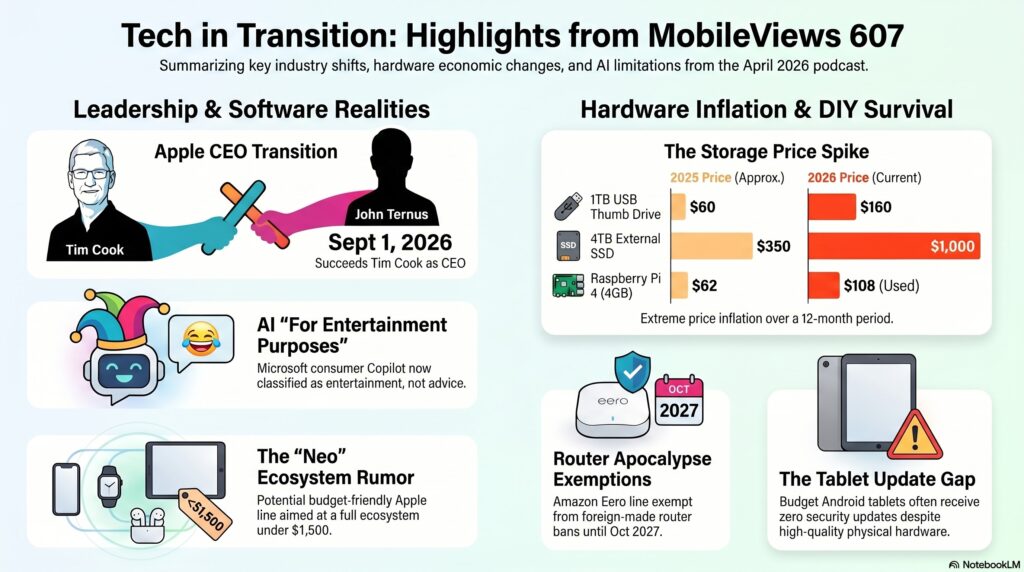
    Jon Westfall and I kicked off episode 607 with the news that Tim Cook is stepping down as Apple’s CEO to become Chairman, with John Ternus taking the helm this September. We speculated that his leadership might usher in a full “Neo” ecosystem—budget-friendly iPads and iPhones—that could finally bring the cost of a complete Apple setup under $1,500 for students. Jon is already leaning into this student-centric future by using NotebookLM to “chunk” his 75-minute lectures into digestible videos and activities, a strategy that is saving him hours of summer prep.

    I spent some time on a “mini rant” about the state of budget Android tablets; while you can find great hardware for under $150, these devices almost never receive security or OS updates, effectively making them disposable e-waste. On the infrastructure side, the “router apocalypse” continues as the FCC’s ban on foreign-made hardware looms, though Amazon Eero recently secured an exemption through October 2027. To prepare for a post-exemption world, I’m preparing to experiment with OpenWrt on an old travel router.

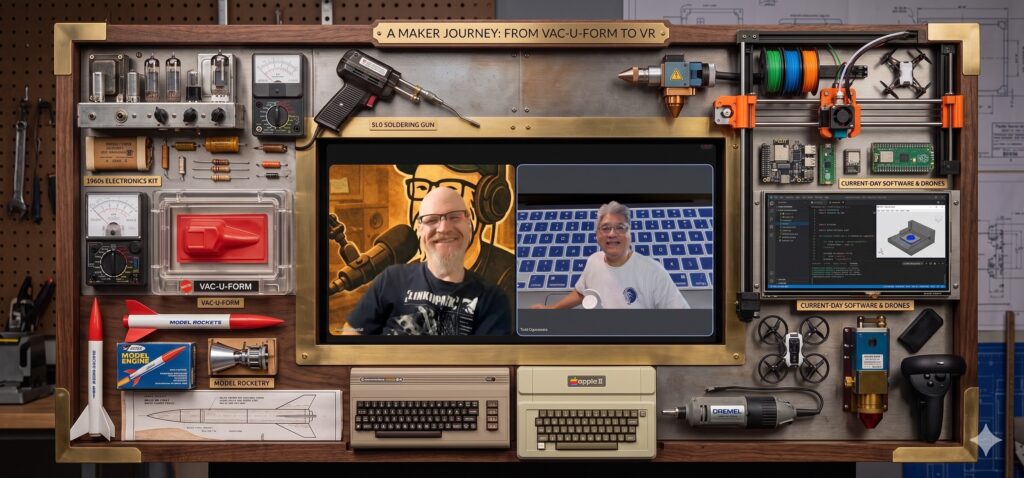
    We wrapped up with a look at the startling 2026 price hikes for storage—where a SSD drive that cost $350 last year is now nearly $1,000—and a discussion of encouraging  maker culture for young people. We debated whether encouraging preteens to use 3D printers and AI coding tools like Codex is better than traditional hobbies, reflecting on the Heathkits and “dangerous” chemistry sets of my own youth.


    Available via Apple iTunes.
    MobileViews YouTube Podcasts channel
    MobileViews Podcast on Audible.com

  • MobileViews 606: Router Bans, the Gemini Mac App, and the 8GB RAM Debate


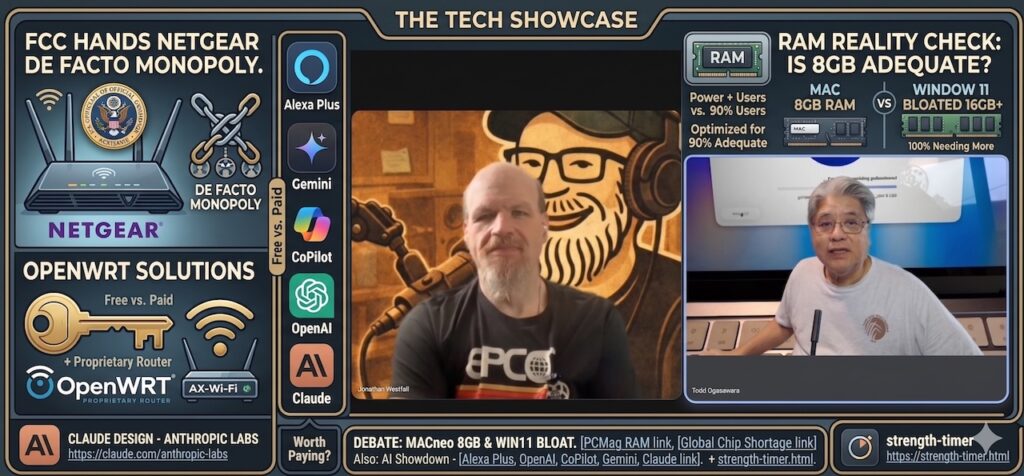
    In this podcast, Jon Westfall and I discussed the FCC’s ban on foreign-made routers, noting that Netgear received a unique exception until October 2027. This led us to consider the merits of “rolling your own” router using OpenWrt and a supported consumer WiFi router, or a Raspberry Pi to maintain better control over home gateways. I’ve also started testing the new Gemini Mac OS app, which features a convenient global shortcut and the ability to analyze any active window on your desktop. While its Google Photos integration still struggles with “snout ID” for pet photos, its local file handling makes it a powerful addition to my daily toolkit.

    We also tackled the 8GB RAM debate, finding that the MacBook Neo performs remarkably well for most users because Apple optimizes its OS for its hardware so efficiently. We compared this to the increasingly bloated experience of Windows 11, which forces users to have 16GB or more of RAM. Jon shared his experience upgrading to Google One AI Pro to leverage NotebookLM for his university courses, transforming long lectures into concise, AI-generated study materials. He even demonstrated the value of paid AI tiers by building a custom Strength Tempo Trainer web app in just 20 minutes using Codex. We discussed the “AI divide” comparing free AI tiers to paid ones. Finally, I’ve found Alexa Plus surprisingly useful for troubleshooting Amazon specific and Echo device glitches through its browser-based interface.

    Available via Apple iTunes.
    MobileViews YouTube Podcasts channel
    MobileViews Podcast on Audible.com

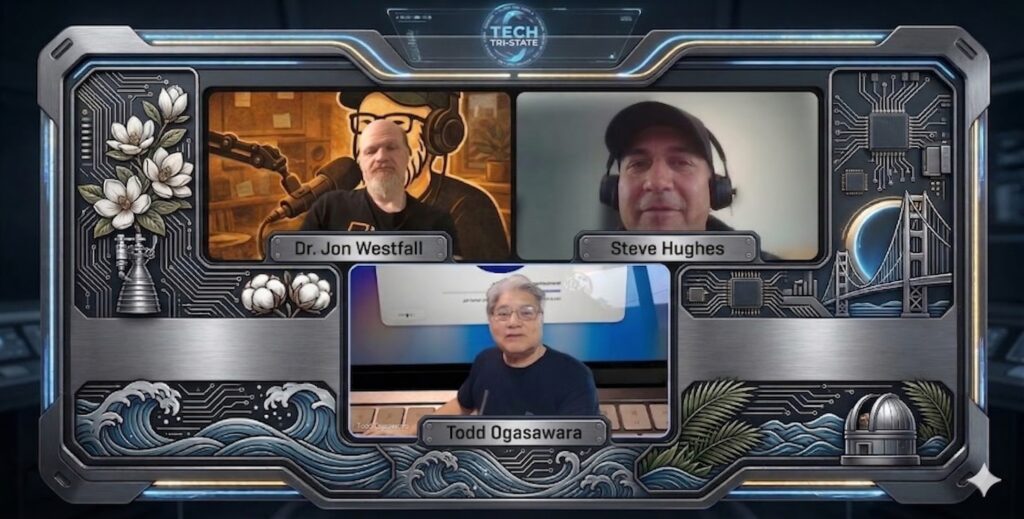
  • MobileViews Podcast 605: Google Gemini Notebooks; democratization of app dev?; guest: Steve Hughes


    In this podcast Jon Westfall and I were joined by our long-time friend Steve Hughes, who returned to the show after a long period of heavy travel. I used the opening of the show to test a new Boya CM40 condenser microphone, comparing its sound quality to my MacBook’s built-in mic, my 4K USB camera, and my AirPods. It is always fun to play with new toys..

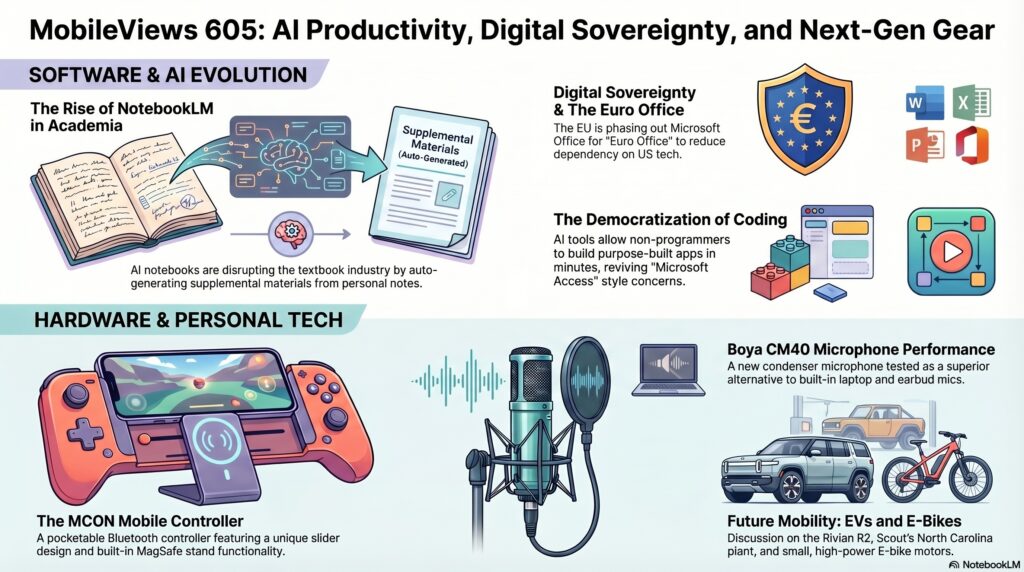
    I have become a massive fan of NotebookLM and the new notebooks feature within Google Gemini. I recently fed hundreds of our podcast show notes and blog posts into a Gemini notebook to see how it handled the data. We discussed how this technology is becoming popular in academia as a tool for students to engage with material, though it poses a significant threat to the textbook industry by easily creating the same supplemental materials publishers charge for,. I’ve even been using it to build animated video presentations and conduct additional research, which are features included in the $20-a-month AI Pro subscription,.

    Our conversation turned toward the concept of digital sovereignty,” a movement in the European Union to reduce dependency on U.S. tech giants. We looked into the history of open-source office suites, from StarOffice to the current fragmentation of LibreOffice,. Interestingly, the EU is now looking toward “EuroOffice,” a fork of OnlyOffice (which itself has roots in Latvian and Russian development) to replace Microsoft Office. Steve, Jon, and I debated whether this would be a cleaner transition than past attempts, especially as corporate customers grow increasingly annoyed with the “nickel and diming” of subscription services.

    Jon and I revisited the “technology gap” we see in students who have grown up exclusively on Chromebooks. Many struggle with the basic concept of a file structure or how to actually download a file to a specific directory. My own daughter recently joked that Windows is for “old people,” which signals a shift Microsoft should be wary of. However, Jon shared a positive note on the democratization of app development. He built a purpose-built fitness timer for his strength training in just 20 minutes using AI. While this “one-two punch” of AI interviewing and coding is powerful, I cautioned against the “Microsoft Access problem”—the risk of non-programmers building mission-critical tools that lack documentation or error-checking.

    On the hardware front, Jon shared his first impressions of the MCON controller, a slider-style mobile gaming device that features a built-in MagSafe stand. While the buttons are a bit small for some, its “pocketability” makes it a strong contender for travel,. Steve updated us on the Sea Otter Classic, essentially the “CES for bikes,” highlighting new e-bike motors that are rejuvenating the industry,. We also touched on the EV market, specifically the Scout SUV and its move toward a range-extending motor. Steve even noted a great practical tip: using an EV as a reverse-load power source to keep a refrigerator running for up to two weeks during a blackout.

    Listen to the full podcast to hear Steve’s story about meeting will.i.am at CES.

    Available via Apple iTunes.
    MobileViews YouTube Podcasts channel
    MobileViews Podcast on Audible.com
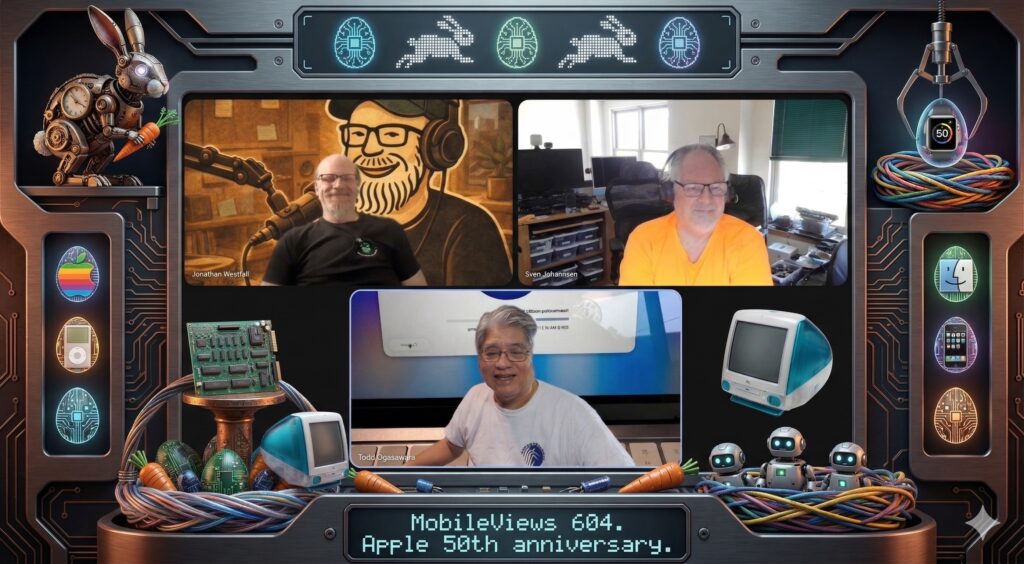
  • MobileViews 604: Google AI Pro 5TB; Google FlexOS USB stick; Apple 50th; guest Sven Johannsen


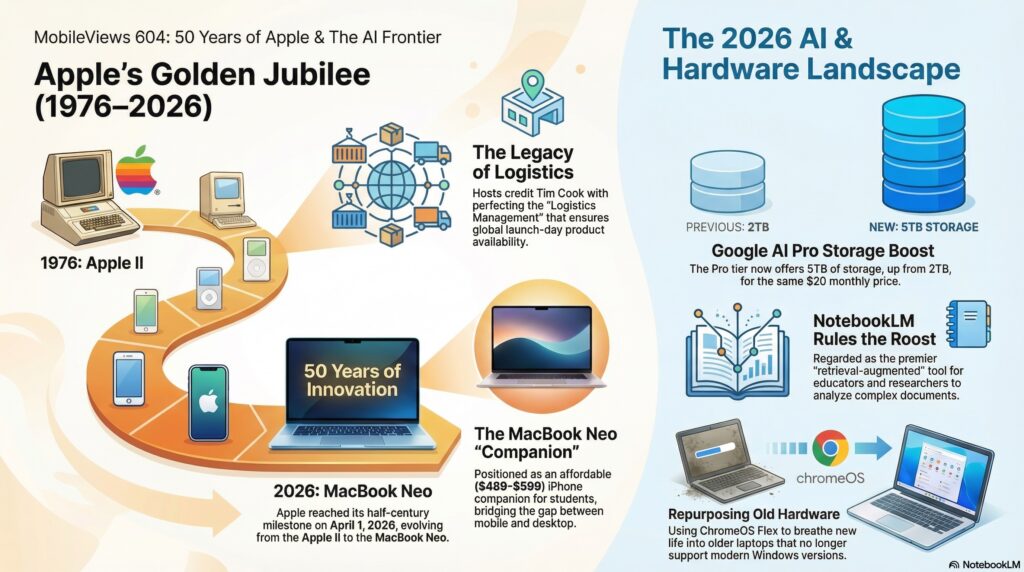
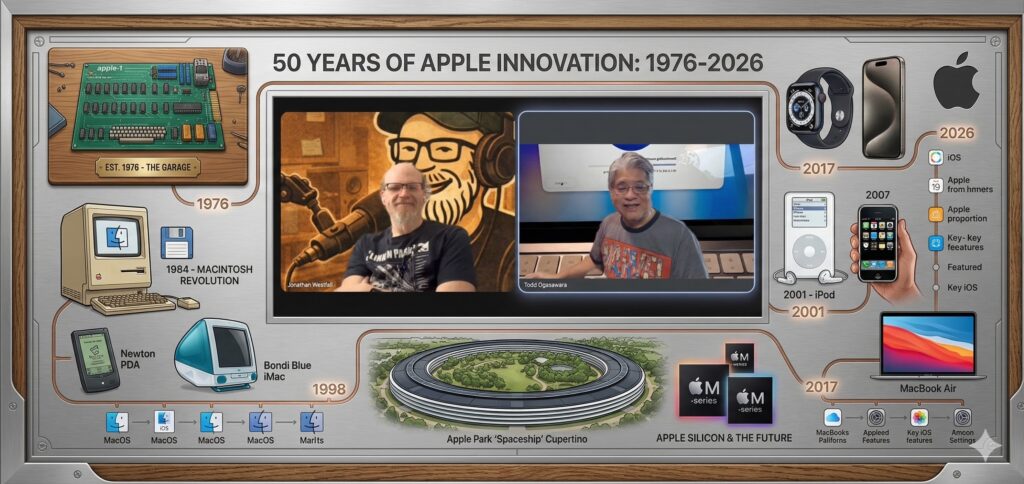
    Jon Westfall and I were joined by Sven Johannsen for MobileViews Podcast 604. We spent a good portion of the show reflecting on a major milestone: Apple turned 50 on April 1st. Beyond the nostalgia, we dove into Google’s latest AI subscription changes and some clever new hardware gadgets..

    I’ve been getting a lot of mileage out of Google AI Pro, and they recently gave their subscription service more value by bumping the storage from 2TB to 5TB for the same $200-a-year price. One of the most impressive new features is NotebookLM’s cinematic video creation, which I used to analyze and summarize 18 years of our own podcast history. We also discussed Google Flex OS, which now offers a three-dollar bootable USB stick for people who want a low-barrier way to try Chrome OS on their existing hardware.

    We shared our “origin stories” with Apple, and it was a fun look back at how the technology evolved: I also recounted my favorite customer service story from 2010, where an email to Steve Jobs’ office resulted in me getting a launch-day iPad despite a UPS delivery delay—and UPS actually made its first-ever Saturday delivery in my region just to get it to me and other iPad pre-order customers..

    We revisited the MacBook Neo. While critics focus on the 8GB RAM limit, the build quality is miles ahead of the “plasticky, bendy” Chromebooks that dominate the budget market. Jon noted that his students are the real target for this device; they want to be in the Apple ecosystem but often can’t afford the Pro models, making the $499 education price a potential game-changer.

    We closed out the episode with discussions of the WiFiPorter Sven bought to provide guests to his home with a seamless guest WiFi connection and the MCON magnetic transforming game controller that Jon recently purchased.

    Available via Apple iTunes.
    MobileViews YouTube Podcasts channel
    MobileViews Podcast on Audible.com
  • MobileViews 603: Sidecar-Neo-iPad-3rd display; Tiny Teams; Different Enough vibe coded app


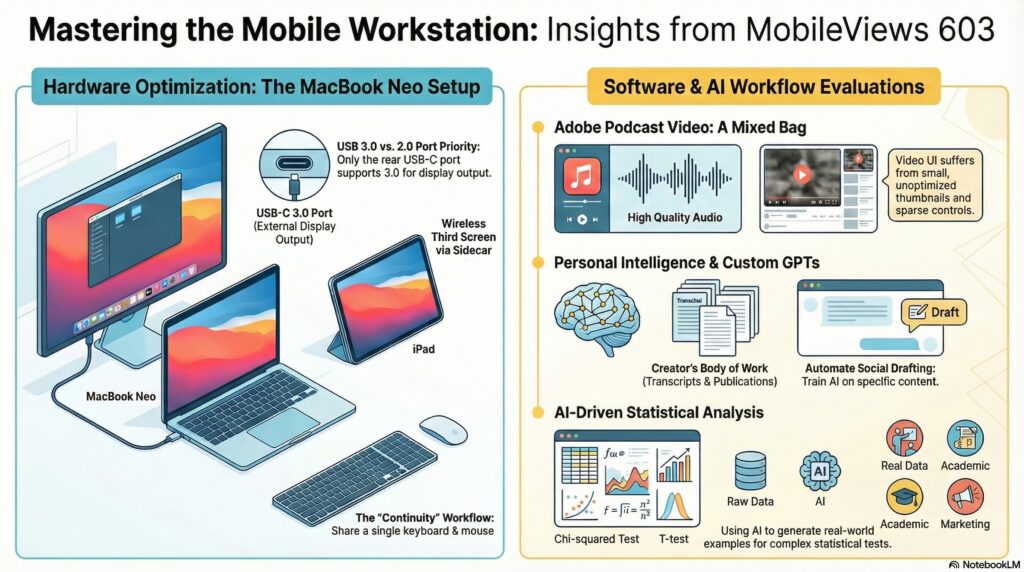
    For MobileViews 603, recorded on March 29, 2026, I decided to return to my classic Blue Yeti Nano microphone, which I used for hundreds of episodes in years past. Much of our hardware discussion this week centered on my ongoing fascination with the MacBook Neo. I discovered that while it officially only supports one external display, you can effectively run a three-screen setup by using an iPad as a wireless third display through the MacOS Sidecar feature. This configuration, utilizing Mac OS Continuity, allows me to control the iPad using the MacBook’s keyboard and mouse, creating a highly functional workstation without the need for extra cables. Jon has adopted a similar workflow in his classroom, using an iPad alongside his MacBook to handle student attendance while presenting his slides.

    On the software side, we discussed the release of iOS 26.4, which introduced a “Playlist Playground” feature in Apple Music on mobile devices. This tool uses AI to generate playlists from simple text prompts, and it serves as an excellent discovery tool for investigated genres where you might not be an expert. Looking further ahead, we looked at reports that iOS 27 may finally allow Siri to integrate with third-party AI chatbots like Gemini or ChatGPT. Since neither of us is a major fan of the current Siri, being able to choose a preferred chatbot would be a welcome change.

    As we approached Apple’s 50th anniversary as an incorporated entity on April 1st, I reflected on the history of “tiny teams” in technology. While modern projects often involve hundreds of people, many of the most foundational tools—such as Apple DOS, CPM, and VisiCalc—were built by just one or two individuals. For instance, Paul Laughton built the first disk operating system for Apple in just 35 days by himself. We even saw this principle in action this week with Jon’s new project, “Different Enough”. He built this statistical testing website using GitHub Pages, TypeScript, and React in just 90 minutes. His secret was using ChatGPT to “interview” him about his requirements before generating a prompt for OpenAI Codex to build the final application.

    We followed up on the Adobe Podcast video test from last week; while the speaker identification worked well for the transcript, I had to boost the output volume significantly in post-production because it was surprisingly low. Jon also shared a bug he encountered with the Plaud Note platform, which misidentified a speaker by tagging the same student profile 20 times across different meetings with different students.. On a more aesthetic note, I shared Casio’s announcement of a Japanese Lacquer Edition calculator. It is such a beautiful piece of craftsmanship that I’m now hoping Apple considers a lacquer edition for their MacBook line.

    We finished up with a discussion of Jon’s latest vibe coding project, a web app called “Different Enough”. The site is designed to help users run various statistical tests to determine if data sets are actually significantly different from one another.

    Available via Apple iTunes.
    MobileViews YouTube Podcasts channel
    MobileViews Podcast on Audible.com
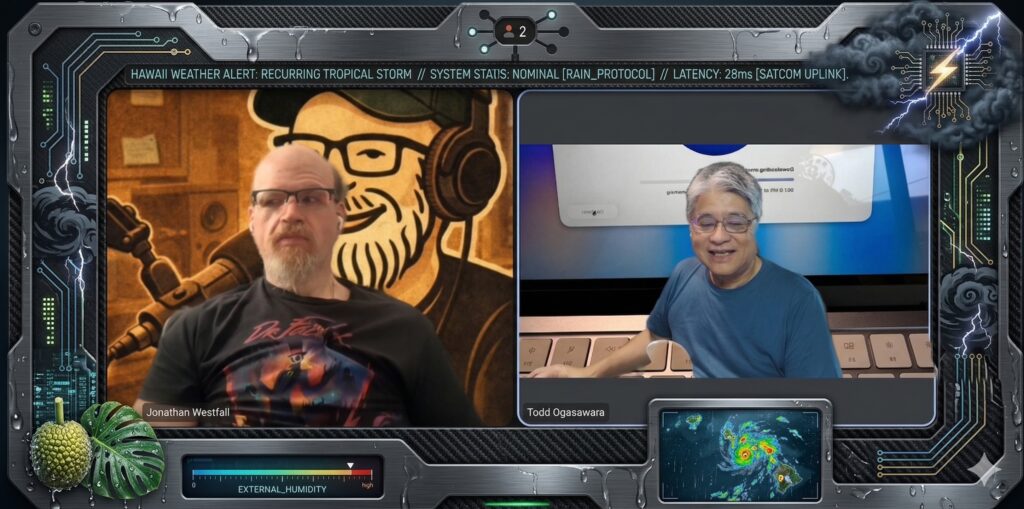
  • MobileViews 602: Adobe Podcast video recording; Grandparents glued to phones? MacBook Neo USB ports & more


    MobileViews 602: Adobe Podcast video recording; Grandparents glued to phones? MacBook Neo USB ports & more


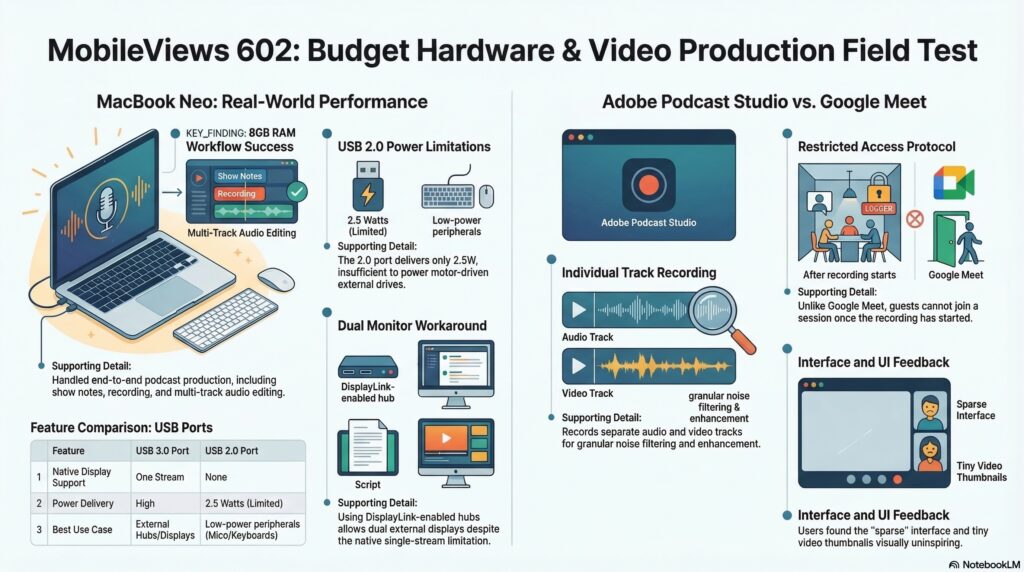
    Jon Westfall and I started the podcast with a technical experiment. We recorded the first portion of the show using Adobe Podcast’s new video recording feature. While the service is included in my $100-a-year Adobe Express Premium subscription, Jon found the interface a bit “sparse and sad” compared to our usual Google Meet setup, noting a significant amount of wasted screen space and a lack of customization for guests. However, from a producer’s standpoint, the ability to record each participant on an individual video and audio track is a huge win for post-production editing, especially when one of us has unexpected background noise. Adobe Podcast also has the ability to generate transcripts in various formats.

    I am still finding the MacBook Neo to be an incredibly fun device to use, even though I already own a more powerful M4 MacBook Air. This week, I dug into some of its hardware limitations, specifically regarding the two USB ports. While Apple officially states the Neo only supports one external display through its single USB 3.0 port, I learned that hubs supporting DisplayLink technology might actually allow for a dual-display workaround. I also discovered a power quirk: the Neo’s USB 2.0 port only delivers 2.5 watts of power, which wasn’t enough to spin up an external DVD/CD drive I tested, whereas the 3.0 port handled it perfectly. I’ve really started thinking of the Neo as the ultimate iPhone companion—much like the handheld PC companions of thirty years ago.

    On the app side, I’ve been testing the “Playlist Playground” feature in the Apple Music beta. It uses Apple Intelligence to create playlists based on text prompts, and while it’s not perfect, it’s a great discovery tool that intelligently filters for songs actually licensed on the platform. Jon is also navigating the Apple ecosystem with his new app, Tempo Pilot, which is currently in the App Store review process. We discussed Apple’s recent decision to restrict apps like Replit that facilitate “vibe coding” on-device, as they violate long-standing rules against apps changing their own behavior unexpectedly.

    We closed out the podcast with a discussion about a BBC report about grandparents being “glued to their phones”. It sparked a conversation about isolation and the unique Generation Jones cohort (born 1954–1965) that I fall into—a group that missed the social upheavals of the early 60s but became the first senior citizens to be truly digitally connected. We even shared some childhood stories about our names; Jon revealed he shortened “Jonathan” to “Jon” in third grade specifically to avoid learning how to write the full name in cursive.

    Check out the full episode to hear more about my USB power tests and Jon’s experience using AI to prep his app for the App Store review.

    Available via Apple iTunes.
    MobileViews YouTube Podcasts channel
    MobileViews Podcast on Audible.com